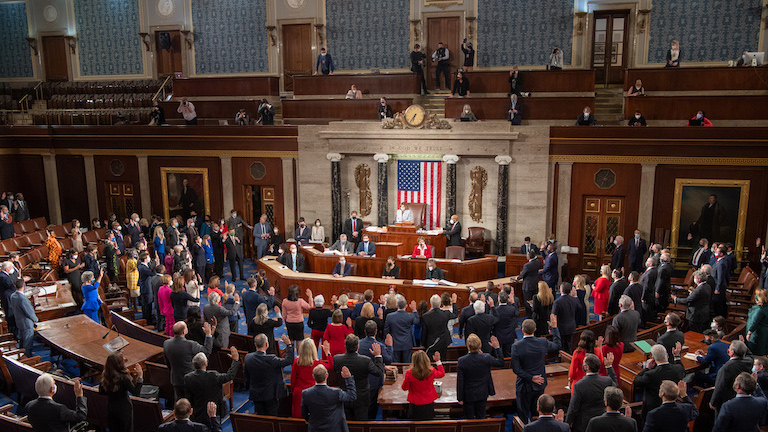
With a new U.S. Congress sworn in last month, AE911Truth founder Richard Gage, AIA, took the opportunity this week to write to all 541 members of both chambers.
With a new U.S. Congress sworn in last month, AE911Truth founder Richard Gage, AIA, took the opportunity this week to write to all 541 members of both chambers. Among them are 60 new U.S. representatives and nine new U.S. senators.
 Read the letter mailed to every member of Congress on Feb. 1, 2021.
While the centerpiece of our advocacy in recent years has been the Bobby McIlvaine World Trade Center Investigation Act, we began our outreach to the 117th Congress by introducing members to the essential information we have produced over the past year and a half:
- The University of Alaska Fairbanks Building 7 report
- Our new documentary SEVEN
- Our pending Request for Correction to NIST’s Building 7 report
- Our YouGov survey showing that most Americans who see the collapse of Building 7 doubt the official story
The purpose of this outreach is to find one or more members of Congress with the courage and integrity to become champions for 9/11 Truth. Furthermore, we hope that when the tide begins to turn, members of Congress will be quicker to add their support — especially if they fear being criticized for having done nothing about 9/11 when they were informed about it.
Please stay tuned for outreach efforts in the weeks ahead, including the opportunity to send the new documentary SEVEN to your members of Congress. When the tide does begin to turn for 9/11 Truth, we want to be sure that our elected representatives can’t get away with saying they weren’t informed.
